A Sacred Journey That Demands Structured Preparation
The Char Dham Yatra — covering Yamunotri, Gangotri, Kedarnath, and Badrinath — is one of the most spiritually significant pilgrimages for Indian families. Unlike shorter religious trips, this Himalayan circuit requires physical readiness, careful coordination, and thoughtful pacing. For families traveling with elders and children, structured preparation is not optional — it is essential.
A calm and fulfilling Char Dham journey begins months before departure.
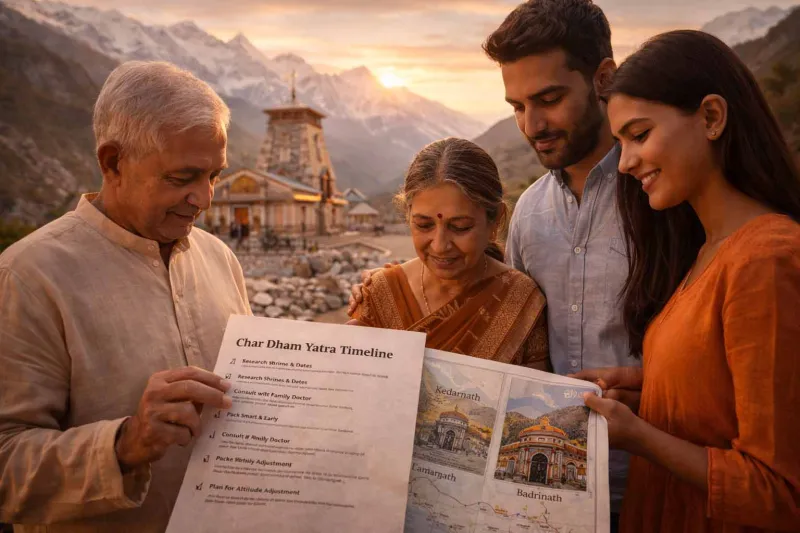
Three to Four Months Before Travel: Foundation Planning
The first step is deciding the travel window. The yatra typically operates between late April or May and October, depending on weather conditions. Early-season travel offers clearer skies and fewer landslides, while peak months like May and June see heavy footfall. Families seeking quieter spiritual immersion may consider September, after monsoon season.
Accommodation bookings should be confirmed well in advance. Properties near temple access points reduce fatigue, particularly in Kedarnath, where terrain can be physically demanding. Helicopter services, if required, must also be reserved early, as availability fills quickly.
Health preparation begins here. Elders should consult their physicians, especially if they have cardiac, respiratory, or mobility concerns. Light walking routines started weeks in advance improve stamina.
One to Two Months Before Travel: Final Coordination
Transport logistics should be locked during this phase. Reliable drivers experienced in mountain terrain are invaluable. Road journeys in Uttarakhand involve winding routes and altitude shifts, requiring careful navigation.
Buffer days must be incorporated. Weather conditions in the Himalayas can change rapidly. Landslides or heavy rainfall may delay movement between destinations. A well-designed itinerary includes flexibility without creating pressure.
Travel insurance, medical kits, layered clothing suitable for fluctuating temperatures, and proper footwear should be organised. At higher altitudes, weather can shift from sunshine to cold winds quickly.
During the Journey: Pace Over Performance
The most common mistake families make is underestimating physical exertion. Kedarnath, in particular, requires preparation. While helicopter options reduce strain, those opting for the trek must pace themselves carefully. Frequent hydration, light meals, and adequate rest stops are critical.
Acclimatisation matters. Spending a night at intermediate altitudes before ascending further reduces discomfort. Avoid rushing from one dham to another without rest. Spiritual journeys are meant to be experienced with presence, not urgency.
Post-Darshan Rest and Return Planning
After completing the circuit, allocate time for recovery before returning home. Immediate long-distance travel following high-altitude exposure can cause exhaustion. A night in Rishikesh, Haridwar, or Dehradun allows the body to readjust.
Designing a Yatra with Dignity and Calm
The Char Dham Yatra is not a race to completion. It is a journey of devotion, resilience, and reflection. When planned thoughtfully, it strengthens family bonds and deepens spiritual connection.
At Bookmywings, we believe pilgrimages require both reverence and structure. A carefully designed timeline reduces uncertainty and allows families to focus on what truly matters — faith, gratitude, and shared purpose.
When clarity guides preparation, the mountains welcome you with serenity rather than strain.