For many Indian families, the idea of Kashmir in winter creates an immediate question: Will my children be able to handle the cold? What about elderly parents?
The concern is reasonable.
Kashmir is not simply a cooler version of the hill stations many Indian travellers are used to. During the heart of winter, temperatures can fall below freezing, snowfall can alter road conditions, and places such as Gulmarg can feel dramatically colder than Srinagar.
But there is another side to the story.
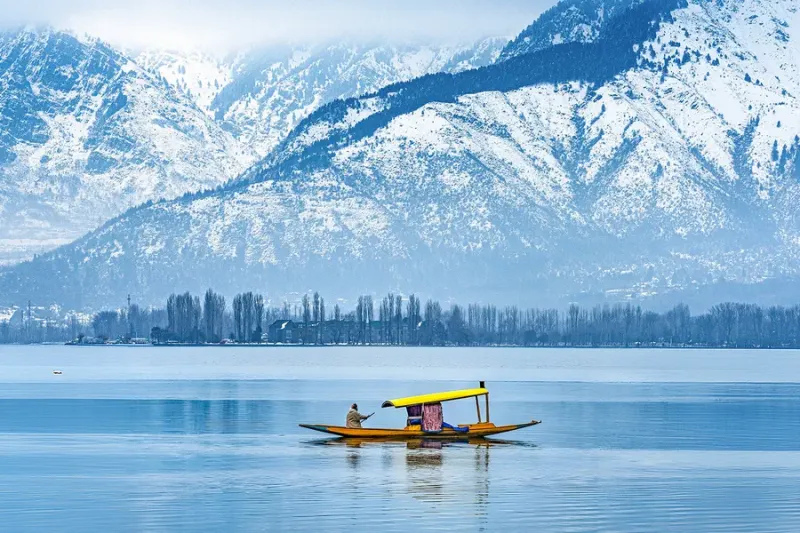
Winter is also when Kashmir becomes a completely different destination. Snow-covered landscapes, quiet mornings, frozen water, winter food and the possibility of seeing fresh snowfall make December to February particularly attractive to families who specifically want a snowy holiday.
The important distinction is this: Kashmir in winter is manageable for most families when the itinerary is designed around the weather. It becomes difficult when travellers treat it like a normal sightseeing trip.
Here is what Indian families should realistically know before booking.
How Cold Is Kashmir in December, January and February?
The first mistake is thinking of the entire Kashmir Valley as having one winter temperature.
It doesn't.
Srinagar, Pahalgam and Gulmarg have noticeably different winter conditions, and the difference becomes important when travelling with children or older adults.
The India Meteorological Department's Srinagar centre provides weather information for individual locations across the region, rather than treating Kashmir as one climatic zone.
December: Winter Begins to Take Over
December is a transition month.
The first half can still feel relatively manageable during the daytime, but temperatures drop significantly as winter progresses. From around 21 December, Kashmir enters the traditional Chillai Kalan, the 40-day period associated with the harshest part of winter.
For families, December can therefore be a good compromise if the objective is to experience winter without necessarily targeting the deepest cold.
But there is an important caveat: snowfall is weather-dependent.
Booking a December trip specifically because you expect Srinagar to be covered in snow can lead to disappointment. Higher areas such as Gulmarg have a much stronger winter-snow identity; Srinagar itself may or may not have substantial snow during your exact travel dates.
January: The Serious Winter Month
January sits at the centre of the Kashmir winter experience.
Much of the month overlaps with Chillai Kalan, when cold is at its most intense and snowfall is more likely across higher areas.
For Indian travellers arriving from warmer cities, the contrast can be dramatic.
The challenge isn't necessarily spending 20 minutes outside in the snow. It is managing several days of cold, especially early mornings, evenings and periods when the weather turns wet or snowy.
January is therefore best suited to families who genuinely want a winter experience and are prepared to pack accordingly.
February: Still Winter, But More Flexible
February is often overlooked because travellers think of winter as ending with January.
It doesn't.
After Chillai Kalan, Kashmir moves through shorter traditional winter phases, and cold weather can continue well into February.
For travellers who want snow, February can be an attractive option, particularly in higher destinations such as Gulmarg. JKTDC describes Gulmarg's skiing season as generally beginning around mid-December and continuing into mid-April, although actual snow conditions naturally vary from year to year.
For a family that wants a balance between winter scenery and somewhat more flexible travel conditions, February can be worth considering.
Is Kashmir Too Cold for Children?
For most healthy children, cold weather by itself does not make Kashmir off-limits.
The real issue is exposure.
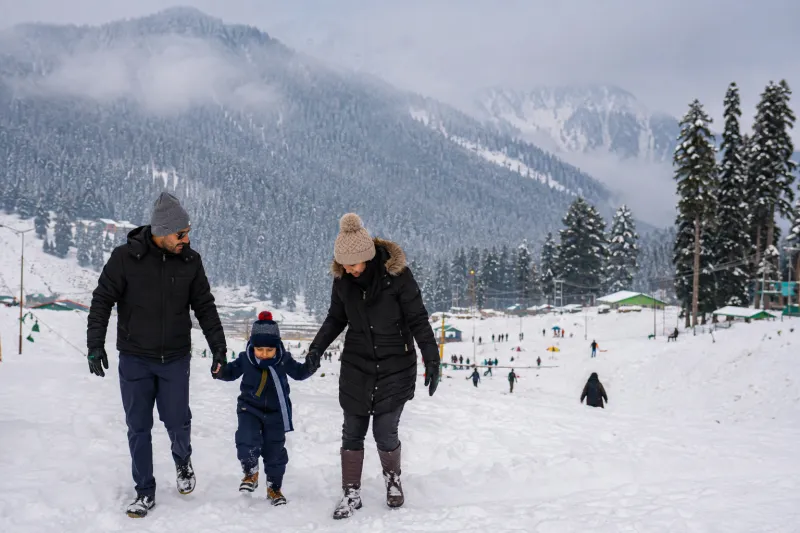
A child who spends 30–45 minutes playing in snow while properly dressed may be perfectly comfortable. The same child can become miserable after several hours of standing outdoors in wet shoes, damp gloves and inadequate layers.
This is why parents should stop thinking only about the temperature shown on the weather app.
Think about:
- How long the child will be outdoors
- Whether clothes can become wet
- Whether there is somewhere warm to return to
- How early the day's sightseeing starts
- Whether the child has enough winter clothing
- How much walking is involved
- Whether the itinerary includes higher-altitude areas
Babies and Very Young Children Need More Planning
Travelling with a baby or toddler is different from travelling with a school-age child.
Very young children cannot communicate discomfort as clearly, and keeping them warm becomes the parent's responsibility throughout the day.
For families with infants or children with known respiratory or other medical concerns, it is sensible to discuss the trip with the child's paediatrician before travelling rather than relying on generic travel advice.
For older children, however, the bigger issue is usually comfort and logistics, not the mere fact that Kashmir is cold.
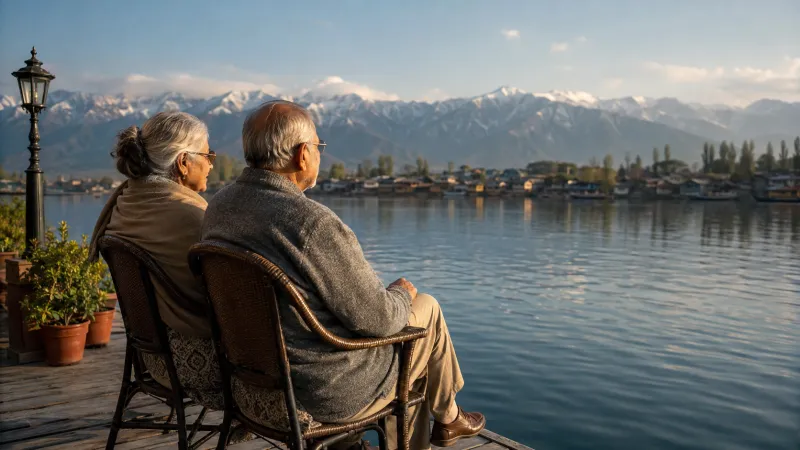
What About Elderly Parents?
This is where itinerary design becomes more important than the destination itself.
A fit 60-year-old who enjoys winter weather may cope better than a much younger traveller who dislikes cold and walking. Age alone should not determine whether parents can visit Kashmir in winter.
Instead, consider their:
- Mobility
- Cold tolerance
- Existing medical conditions
- Ability to walk on snow or slippery surfaces
- Comfort with long road journeys
- Preference for indoor versus outdoor sightseeing
For elderly travellers, Srinagar can be a more comfortable base than spending several nights at higher, colder destinations.
The best family itinerary may involve shorter outdoor excursions, comfortable accommodation, flexible mornings and fewer hotel changes.
That is very different from trying to cover every famous Kashmir destination in five or six days.
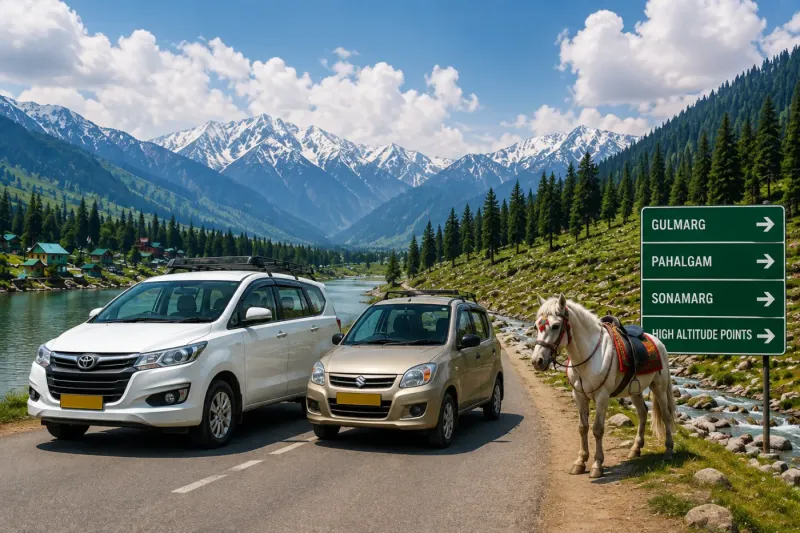
Srinagar, Pahalgam and Gulmarg: Which Is Better for Families in Winter?
The three destinations should not be treated equally during winter.
Srinagar: The Easiest Family Base
Srinagar is usually the most practical starting point for families.
You have access to accommodation, restaurants, local transport and indoor alternatives if the weather becomes unpleasant.
Winter sightseeing around Srinagar can be slower and quieter than in the warmer months. The city can still be a useful base while families decide how much cold exposure they actually want.
For parents travelling with young children or elderly family members, this flexibility is valuable.
Gulmarg: Best for the Snow Experience
If the family's main objective is snow, Gulmarg is usually the obvious focus.
JKTDC identifies Gulmarg as a major winter skiing destination, with skiing generally beginning around mid-December.
But there is an important family-travel distinction.
Gulmarg is not simply "Srinagar with more snow."
It is colder, higher and more demanding physically. JKTDC notes that the Gondola reaches Apharwat at around 3,980 metres, making altitude another consideration for travellers going to the upper mountain.
Families should therefore avoid assuming that every child or elderly parent needs to go to the highest available point simply because the Gondola is operating.
Pahalgam: Beautiful, But Weather-Dependent
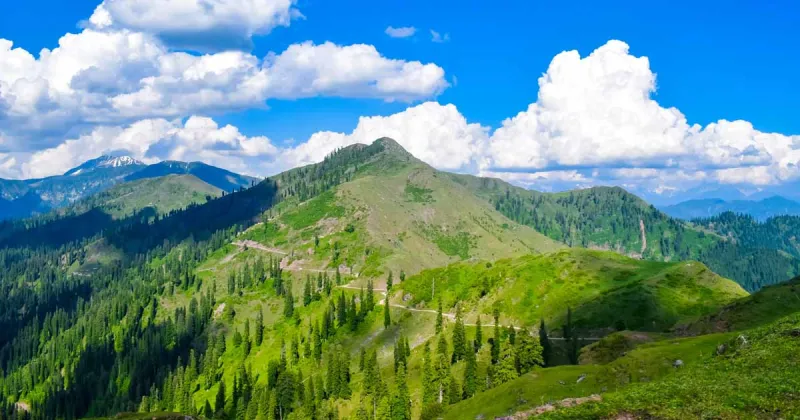
Pahalgam offers a different winter atmosphere, with mountain scenery and a quieter valley setting.
However, winter conditions can affect access to surrounding attractions and the experience can be considerably different from the warmer months.
For families, Pahalgam works best when treated as a weather-dependent destination, rather than a checklist of attractions that must all be completed.
The Biggest Winter Travel Problem Isn't the Cold—It's Disruption
This is one of the most important things Indian families should understand.
Snowfall is beautiful in photographs.
It can also disrupt your itinerary.
Heavy snow or poor visibility can affect road travel, while winter weather can also affect flight operations. Airports operate with specific low-visibility procedures, and winter conditions can therefore create delays even when your holiday itinerary itself is perfectly planned.
That means you should build buffer time into your Kashmir trip.
Don't Schedule Your Return Flight Immediately After a Long Mountain Transfer
Suppose your flight from Srinagar is at 10 AM and your plan requires travelling back to Srinagar from a distant destination that same morning.
That is a fragile itinerary.
Winter travel rewards conservative planning.
A better approach is to return to Srinagar the previous day, especially when weather conditions are unsettled.
This is one area where a good travel plan is less about squeezing in another sightseeing point and more about protecting the parts of the trip that cannot be recovered if something goes wrong.
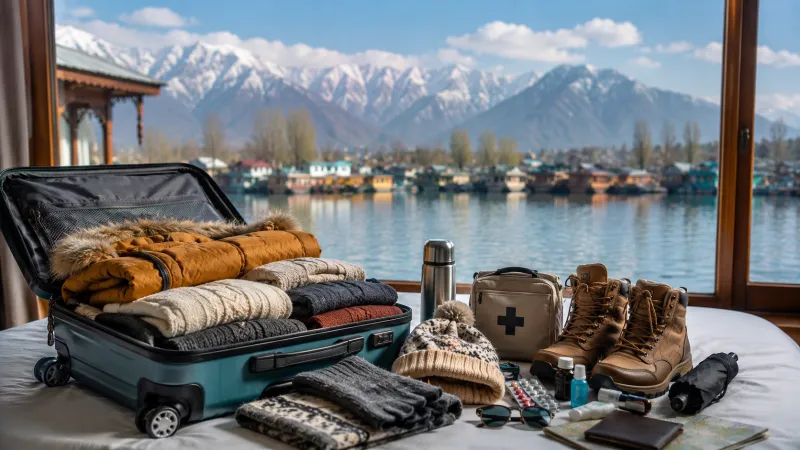
What Should Families Pack for Kashmir in Winter?
The right clothing matters more than buying the most expensive jacket.
The goal is layering.
A Practical Winter Packing List
For each family member, consider carrying:
- Thermal innerwear
- A warm fleece or sweater
- Insulated winter jacket
- Woollen cap covering the ears
- Warm socks
- Waterproof or water-resistant shoes with good grip
- Gloves, preferably with an extra pair
- Scarf or neck warmer
- Comfortable trousers suitable for layering
- Moisturiser and lip balm
- Sunscreen
- Personal medicines
- Small day bag for extra layers
- Spare clothes for children
For children especially, carry more than one pair of socks and gloves.
Snow play often turns into wet-clothing management surprisingly quickly.
And don't rely entirely on the fact that winter gear can be hired or purchased locally. Local availability and quality vary, and families are better off arriving with their basic essentials already sorted.
What Does a Family Day in Kashmir Winter Actually Look Like?
A winter itinerary should not follow the same rhythm as a summer Kashmir holiday.
Instead of starting extremely early, spending the entire day outdoors and returning late at night, consider a slower structure.
A More Comfortable Winter Rhythm
Morning: Have breakfast without rushing. Allow roads and weather conditions to settle.
Late morning to afternoon: Do the main outdoor sightseeing while there is daylight and relatively better daytime comfort.
Late afternoon: Return to the hotel before temperatures fall sharply.
Evening: Keep the evening flexible—local food, indoor relaxation, shopping or simply enjoying the hotel.
This may sound less adventurous.
For families, it is often a much better holiday.
Should You Book Kashmir in December, January or February?
There is no single "best" winter month.
It depends on what your family actually wants.
MonthWinter FeelSnow FocusFamily ComfortBest ForDecemberIncreasing coldPossible, especially higher areasRelatively easier early in monthFirst winter tripJanuaryDeep winterStrong winter/snow possibilityMost demandingSerious snow experienceFebruaryWinter continuesGood potential in higher areasOften more flexible than peak winterSnow + comparatively easier planning
The table is a planning guide, not a snowfall guarantee. Actual snowfall and temperatures vary from year to year.
When Should Families Think Twice About Winter Kashmir?
Winter Kashmir may not be the right choice if your family:
- Strongly dislikes cold weather
- Has very young children and wants a highly active outdoor itinerary
- Has elderly travellers who struggle with cold or slippery surfaces
- Expects guaranteed snowfall on specific dates
- Cannot tolerate schedule changes
- Has very tight flight or hotel connections
- Wants to cover many destinations in a short period
In such cases, a milder season may provide a more comfortable Kashmir experience.
On the other hand, if your family specifically wants snow, winter scenery and a slower Himalayan holiday, December to February can be one of the most memorable times to visit.
How Bookmywings Would Approach a Family Winter Itinerary
For a family winter trip, the objective should not be to promise the maximum number of attractions.
It should be to reduce avoidable discomfort.
That means choosing accommodation carefully, keeping realistic travel days, allowing weather buffers, avoiding unnecessarily aggressive sightseeing and making the itinerary flexible enough to adapt when snowfall changes road conditions.
This matters particularly for families travelling with children and parents.
A good winter Kashmir itinerary should answer three questions before the trip begins:
- Where will we stay if the weather changes?
- What happens if a road journey takes longer than expected?
- Which activities are optional rather than essential?
That is the difference between a winter trip that looks good on paper and one that actually feels comfortable on the ground.
So, Is Kashmir in Winter Too Cold for Kids and Parents?
Not necessarily.
Kashmir in December, January and February is genuinely cold, and the coldest part of winter should not be underestimated. Chillai Kalan, snowfall, freezing temperatures and winter road conditions are real considerations—not just atmospheric details for a travel brochure.
But cold does not automatically mean unsuitable for families.
The smarter question is: Can your family travel comfortably in cold weather with the right clothing, accommodation, pace and flexibility?
For most families, the answer can be yes.
Choose Srinagar as a practical base, treat Gulmarg as a dedicated snow experience rather than a compulsory sightseeing stop, keep Pahalgam weather-dependent, avoid overloading each day, and leave enough margin for winter disruptions.
And most importantly, don't book Kashmir in winter simply because you saw a photograph of snow. Book it because your family is prepared for the reality that comes with it.
That reality—cold mornings, warm rooms, changing roads, shorter outdoor days and the possibility of waking up to a completely white landscape—is what makes winter Kashmir different. And for families who plan around it rather than fight it, that difference can be the best part of the trip.