Ask someone what to eat in Kashmir and the conversation will often begin with Rogan Josh, Gushtaba, Rista and Wazwan.
They deserve their reputation. But for a family holiday, especially one involving children, vegetarians or older parents, that is only part of the story.
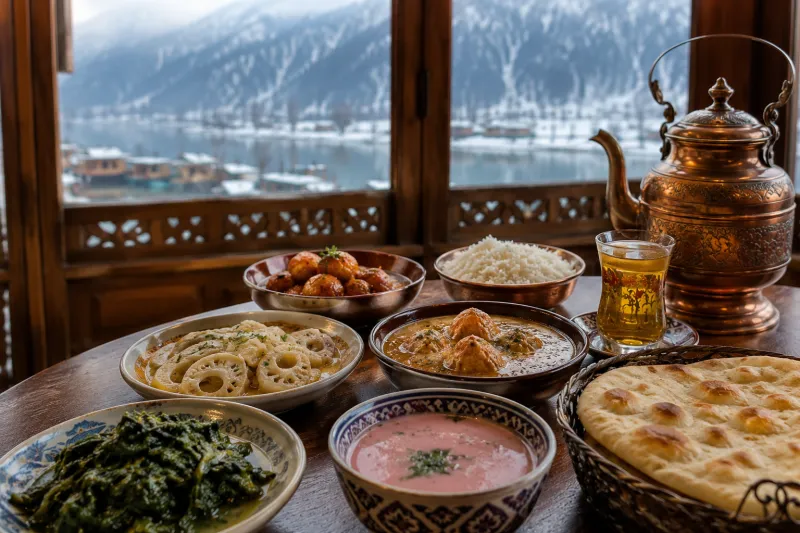
Kashmiri cuisine has a much broader everyday side: steaming bowls of vegetables cooked with yoghurt and aromatic spices, leafy greens, lotus stem, local breads fresh from neighbourhood bakeries, simple rice dishes and cups of Kahwa or Noon Chai.
The distinction matters because Wazwan is not necessarily the best introduction to Kashmiri food for every traveller. The traditional multi-course feast is heavily centred on meat and is associated with ceremonial dining. Jammu & Kashmir Tourism describes Wazwan as an elaborate Kashmiri Muslim banquet, while also documenting distinct culinary traditions associated with Kashmiri Pandit cuisine.
For families, therefore, the better question isn't simply "Where can we eat Wazwan?"
It is: "What can everyone in the family comfortably eat while still experiencing real Kashmiri food?"
Here's where to start.
First, Understand What Kashmiri Food Actually Means
Kashmiri cuisine isn't one single menu.
Historically, the Valley developed distinct culinary traditions, particularly those associated with Kashmiri Muslims and Kashmiri Pandits. The ingredients and cooking styles overlap in places but can differ significantly in the use of ingredients such as curd, asafoetida, onion and garlic.
That is why two restaurants can both advertise "Kashmiri cuisine" and serve noticeably different dishes.
For an Indian family traveller, this is useful rather than confusing.
It means there is room to explore:
- Meat-based Kashmiri classics
- Vegetarian Kashmiri Pandit dishes
- Everyday local greens
- Yoghurt-based preparations
- Traditional breads
- Local bakery food
- Seasonal specialities
- Kashmiri teas and desserts
And you don't have to eat an elaborate Wazwan meal to experience the cuisine.
The Best Vegetarian Kashmiri Foods to Try
Vegetarian travellers sometimes arrive in Kashmir expecting to survive on North Indian restaurant staples.
You don't have to.
The Valley has a substantial vegetarian culinary tradition, and several dishes are particularly suitable for families looking for something comforting rather than intensely rich.
Haak: Simple, Local and Surprisingly Good
Haak is one of the dishes worth ordering when you want something that doesn't feel like tourist food.
It is a preparation of leafy greens, traditionally cooked simply with water, mustard oil and Kashmiri seasonings. Different varieties can be used, including monji haak and other locally available greens.
It is not a glamorous dish.
That's precisely why it is interesting.
For an older parent who prefers vegetables and simple food, haak can be a welcome change from rich restaurant gravies.
Nadru Yakhni: Lotus Stem in a Yoghurt-Based Gravy
Nadru is lotus stem, an ingredient that many travellers from other parts of India may recognise but rarely associate with Kashmir.
In Nadru Yakhni, lotus stem is cooked in a yoghurt-based gravy flavoured with ingredients such as fennel and dry ginger. Incredible India describes it as a vegetarian Kashmiri preparation traditionally served with rice.
For families, this is one of the more interesting dishes to order because it tastes distinctly Kashmiri without being dependent on meat.
Dum Olav: Kashmir's Take on Potato
Dum Olav, often written as Dum Aloo, is one of the easiest introductions to Kashmiri vegetarian food.
The traditional preparation is not necessarily the same as the thick, tomato-heavy "Kashmiri Dum Aloo" found on restaurant menus across India. The Kashmiri preparation uses potatoes with yoghurt and aromatic spices, with Kashmiri red chilli contributing colour and flavour.
If a child is comfortable eating mildly spiced potato dishes, this can be one of the easier local dishes to try.
Still, ask about the spice level before ordering. "Kashmiri" does not automatically mean "mild."
Lyodur Tschaman: Paneer for the Family
If your children are more comfortable with paneer than unfamiliar vegetables, try Lyodur Tschaman.
It is a Kashmiri vegetarian preparation made with cottage cheese in a yellow-hued gravy, with yoghurt and aromatic spices.
It can be a useful bridge between familiar Indian food and local cuisine.
Chok Wangun and Other Vegetarian Dishes
Chok Wangun is a tangy eggplant preparation associated with Kashmiri Pandit cooking. Incredible India notes that the traditional version uses tamarind and does not rely on tomatoes, onions or garlic.
Other dishes worth looking for include Al Yakhni, Rajma Gogji and Nadru Choorma.
Availability varies from restaurant to restaurant, so don't expect every dish to appear on every menu.
Don't Ignore Kashmir's Bakery Culture
One of the easiest ways to understand everyday Kashmiri food is to visit a local kandur, or traditional bakery.
Bread is not merely an accompaniment in Kashmir. Traditional breads form an important part of everyday food culture.
Sahapedia's documentation of Srinagar's kandurs describes breads including girda, tschot, lavasa and other regional varieties. Girda is a soft, bakery-made bread, while lavasa is a thinner everyday bread with similarities to naan.
For families, local bread can be especially useful.
A child who isn't ready to experiment with an unfamiliar curry can still enjoy fresh bread with yoghurt, eggs or another familiar accompaniment.
What to Look For at a Local Bakery
Depending on the bakery and time of day, look for:
- Girda
- Lavasa
- Tschot and related breads
- Sheermal
- Other freshly baked local breads
Sheermal is a slightly sweet Kashmiri bread made with flour, milk and saffron and is traditionally baked in a tandoor.
Don't arrive with the expectation that every bakery will carry every variety. The selection is local and changes with the establishment.
And Then There Is Harissa
If you are visiting Kashmir during winter, you may hear locals talk about harissa.
This is not the chilli paste associated with North African cuisine.
Kashmiri harissa is a slow-cooked mutton-and-rice preparation traditionally eaten hot for breakfast during the colder months. It has a long-standing association with Srinagar's winter food culture and is commonly served with local bread.
It is an experience worth considering for adults who enjoy meat.
But this is precisely where family food planning matters.
Harissa is rich and meat-based, so it may not be the obvious choice for a small child, vegetarian traveller or older parent who prefers lighter meals.
You can experience an important part of Kashmiri food culture without making every family member eat the same thing.
Kashmiri Tea: Don't Leave Without Trying Both
Tea is one of the easiest—and most enjoyable—ways to experience Kashmir's food culture.
There are two particularly distinctive drinks to look for.
Kahwa: The Easier Introduction
Kahwa is a traditional Kashmiri green tea prepared with aromatic ingredients such as cardamom, cinnamon and saffron, often finished with nuts such as almonds. It is traditionally associated with preparation in a samovar, although it can also be prepared using ordinary tea vessels.
For an Indian traveller accustomed to chai, Kahwa can initially taste quite different.
It isn't meant to be milky masala chai.
Think of it as a light, fragrant tea where the aroma of spices, saffron and nuts is more important than sweetness.
For many families, this is the safest first local tea to try.
Noon Chai: Kashmir's Pink, Salty Tea
Noon Chai, also called Sheer Chai, is probably the more surprising of the two.
It is traditionally a salty tea rather than a sweet one, prepared using tea, milk and other ingredients; the resulting drink is characteristically pink. Incredible India describes it as an important part of Kashmiri cuisine and notes its association with winter and the snow-covered landscape of the Valley.
If you're travelling with children, don't assume they will like it.
Let them taste a small amount rather than ordering a full cup immediately.
For adults and older family members, however, Noon Chai is an experience in its own right.
What About Street Food in Kashmir?
This is where a little common sense goes a long way.
You don't need to avoid all street food in Kashmir.
You also shouldn't assume that "local" automatically means safe.
FSSAI specifically recognises street food as an important part of India's food culture while emphasising the importance of hygiene, safe water, proper cooking and separation of raw and cooked foods.
A Simple Rule for Families
When choosing a street-food stall, look for signs of high turnover and clean handling.
Prefer stalls where:
- Food is being cooked fresh and served hot
- There is a steady stream of customers
- Ingredients appear properly stored
- The cooking area looks reasonably clean
- Raw and cooked foods are not being handled together carelessly
- Drinking water appears to come from a safe source
FSSAI also operates a voluntary Hygiene Rating Scheme for eligible food businesses, allowing consumers to make more informed choices where ratings are available.
Be More Conservative With Children
Adults may be willing to experiment.
Parents usually shouldn't experiment quite as aggressively with a six-year-old on the second day of a holiday.
If your child has a sensitive stomach, start with freshly cooked meals from a reputable restaurant or hotel and introduce unfamiliar foods gradually.
Also be cautious about:
- Unwashed raw foods
- Food sitting uncovered for long periods
- Ice of uncertain origin
- Unpasteurised or improperly handled dairy
- Chutneys or sauces that appear to have been sitting out
The goal isn't to become paranoid about food.
It's to avoid turning one adventurous snack into a lost day of your Kashmir holiday.
How to Eat in Kashmir If Your Family Has Different Preferences
This is perhaps the most useful practical tip.
Don't order one enormous meal for everyone.
Instead, build meals around a few shared dishes.
For example:
Family lunch
- Steamed rice
- Nadru Yakhni
- Haak
- A meat preparation for those who want it
- Curd or another familiar side
Simple evening meal
- Local bread
- Mild paneer or vegetable preparation
- Rice
- Soup or another simple dish
Breakfast
- Fresh local bread
- Eggs or a familiar breakfast option
- Kahwa for adults
- Familiar milk/tea option for children
This approach allows everyone to eat comfortably without turning every meal into a culinary challenge.
What If You're Vegetarian?
Tell the restaurant clearly that you are vegetarian.
Don't rely only on ordering something that looks vegetarian.
Kashmiri cooking traditions can involve ingredients and preparation methods that vary between establishments. If you follow a strict vegetarian diet, ask specifically about the preparation of the dish and whether it is cooked separately.
For travellers who avoid onion and garlic for dietary or religious reasons, mention that requirement clearly as well.
Kashmiri Pandit cuisine includes traditional dishes that may naturally align with some such preferences, but modern restaurants can adapt recipes and menus, so the safest approach is always to ask rather than assume.
A Few Family-Friendly Food Habits That Make Kashmir Easier
If you're travelling with children or parents, keep these practical habits in mind:
- Don't make every meal a food experiment. Keep at least one familiar option available.
- Share local dishes. This lets everyone taste without committing to a full serving.
- Order mild when possible. Ask the restaurant to keep the spice level moderate.
- Carry simple snacks for children. Especially during longer sightseeing drives.
- Keep meal timings reasonably regular. Mountain travel can make hunger arrive at inconvenient times.
- Drink safe water. Don't compromise on this for the sake of convenience.
- Try local food gradually. Your first meal doesn't need to be your most adventurous one.
- Don't confuse "not spicy" with "light." Some meat dishes can be rich even when they aren't particularly hot.
- Ask about ingredients. Especially if someone has allergies or follows a strict diet.
What Should You Actually Try on Your First Kashmir Trip?
If you don't want to create a huge food checklist, start with these:
For vegetarians
Nadru Yakhni + Haak + Dum Olav + local bread + Kahwa
That combination gives you a surprisingly good introduction to Kashmiri vegetarian cooking.
For meat-eaters
Try a carefully chosen Kashmiri meat dish, then consider a traditional Wazwan meal if your family enjoys rich food and wants the full ceremonial experience.
If visiting in winter, harissa can be another distinctly local experience—particularly in Srinagar.
For children
Start with:
- Fresh local bread
- Rice
- Mild potato or paneer preparations
- Familiar eggs or breakfast items
- Simple yoghurt-based dishes
Then let the child decide how adventurous to become.
For older parents
Prioritise:
- Freshly cooked food
- Moderate portions
- Rice and yoghurt-based dishes
- Vegetables and greens
- Familiar breakfast choices
- Kahwa if they enjoy tea
The best meal for an older traveller is not necessarily the most famous dish. It is the one they can enjoy without feeling overly full or uncomfortable afterwards.
The Real Kashmir Food Experience Is Smaller Than Wazwan
Wazwan is important, but it can sometimes overshadow everything else.
The more memorable food experiences for a family may be much simpler: breaking a piece of fresh girda in the morning, trying lotus stem for the first time, discovering that pink tea is salty, warming your hands around a cup of Kahwa, or sharing a plate of Dum Olav with rice after a cold day outside.
That is the side of what to eat in Kashmir that is easy to miss if you treat the Valley's cuisine as a list of famous dishes.
For Bookmywings, this is also how we think families should approach food while travelling: experience the destination, but don't force the experience. A good Kashmir itinerary should leave room for local food discovery while keeping children and older parents comfortable.
Conclusion
Kashmir's food culture is far broader than Wazwan.
For families, some of the best discoveries may actually be the quieter ones—Haak, Nadru Yakhni, Dum Olav, Lyodur Tschaman, local bakery breads, Kahwa and Noon Chai. The region's vegetarian traditions alone offer enough variety to make several meals feel distinctly Kashmiri.
The trick is to eat like a traveller, not like you're completing a checklist.
Try the famous dishes when they appeal to you. Look for everyday local food. Ask questions about ingredients. Be sensible with street food. Keep children and older parents in mind when choosing rich or unfamiliar dishes.
And leave some room for the simplest experience of all: a hot local meal after a long, cold day in the Kashmir Valley.
Sometimes that is the food memory you take home.