Packing for Kashmir looks simple until you realise that the weather can change significantly between Srinagar and the higher destinations, and that the same trip can involve sunshine, rain, cold evenings, muddy paths and snow.
That is why the usual advice—"carry warm clothes"—isn't particularly useful.
If you are travelling from Delhi, Mumbai, Bengaluru, Hyderabad, Chennai or another warmer part of India, your idea of cold may also be very different from what you experience in Kashmir. And if your itinerary includes Gulmarg or other higher areas, the clothing and footwear you need can be different again.
The good news is that you do not need an enormous suitcase.
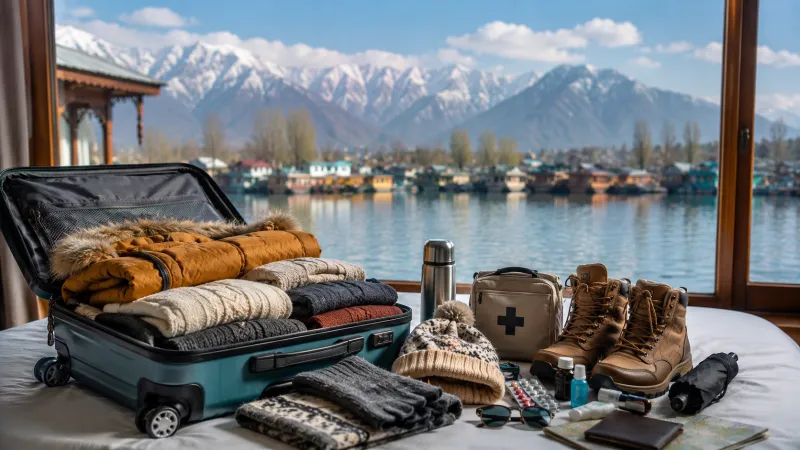
You need layers, sensible footwear, weather protection and a small, well-organised medical kit.
Srinagar's district administration currently recommends light woollens and walking shoes in spring, cotton clothing with rain protection in summer, medium woollens and boots in autumn, and insulated winter clothing with gloves and caps in winter.
Here's how to turn that broad advice into a practical family packing list.
First, Understand the Kashmir You Are Packing For
Before putting anything into a suitcase, look at your itinerary.
A family staying mainly in Srinagar has different requirements from one spending significant time in Gulmarg during snowfall.
Srinagar itself is around 1,585 metres above sea level, while places such as Gulmarg are considerably higher.
That means your packing list should be based on:
- Season
- Destination
- Altitude
- Expected weather
- How much walking you will do
- Whether children or senior citizens are travelling
A useful rule is:
Pack for the coldest activity on your itinerary, not the average temperature of your destination.
If Srinagar feels comfortable during the day but you are going to Gulmarg for snow, your family still needs proper winter protection for that excursion.
Kashmir Packing List by Season
Spring: March to May
Spring is one of the more comfortable periods for sightseeing, although temperatures can vary considerably during the day.
The Srinagar district administration currently describes spring as mild and recommends light woollens, walking shoes and sunscreen.
For a spring family trip, pack:
- 2–3 full-sleeve T-shirts or lightweight tops
- 1–2 sweaters or fleece layers
- 1 lightweight jacket
- Comfortable trousers or jeans
- Light thermal layer if travelling early in the season
- Comfortable walking shoes
- A light rain jacket or compact umbrella
- Sunglasses
- Sunscreen
- Lip balm
- Socks
The important spring mistake
Do not pack only T-shirts because you see sunshine in the forecast.
Kashmir's mornings and evenings can feel distinctly cooler than the afternoon, and weather conditions can change.
Layers are better than one very heavy jacket.
A T-shirt + fleece + lightweight jacket gives you much more flexibility than carrying a single bulky winter coat.
Summer: June to August
Summer is often the easiest season for families travelling from the Indian plains.
The Srinagar administration currently describes June–August as warm and pleasant and recommends cotton clothing, hats, sunglasses and a light raincoat.
For summer, your main suitcase can be relatively light:
- Cotton T-shirts
- Full-sleeve shirts
- Comfortable trousers
- One light sweater or fleece
- One lightweight jacket
- Light rain jacket
- Comfortable walking shoes
- Sandals or breathable footwear
- Sunglasses
- Sunscreen
- Cap or hat
- Small umbrella
Don't make the "Kashmir = always cold" mistake
You do not need to dress your entire family in heavy woollens simply because you are visiting Kashmir.
Srinagar can be quite comfortable during summer days. The requirement changes if you are going to higher-altitude destinations or spending extended time outdoors.
Check the forecast for each destination, not just "Kashmir."
The India Meteorological Department's Srinagar centre provides district and station-level weather information, including observations for Srinagar, Gulmarg and Pahalgam.
Autumn: September to November
Autumn is where the packing equation starts changing again.
The district administration currently describes September–November as cool and recommends medium woollens, a warm jacket and boots.
For autumn, pack:
- Full-sleeve T-shirts
- Shirts
- 1–2 sweaters or fleece jackets
- A warm outer jacket
- Comfortable trousers
- Warm socks
- Closed walking shoes
- Water-resistant shoes if your itinerary includes wet or muddy areas
- Light gloves for colder periods
- Beanie or warm cap
- Rain protection
For late autumn, increase the warm layers rather than relying on a single jacket.
Winter: December to February
Winter is where the difference between ordinary cold-weather clothing and genuinely useful Kashmir clothing becomes obvious.
The Srinagar district administration describes winter as cold and snowy and recommends heavy woollens, an insulated jacket, gloves and a cap.
If you are travelling specifically for snow, think in terms of a system of layers, not one thick sweater.
Your winter packing list should include:
- Thermal innerwear
- Full-sleeve warm base layers
- Fleece sweater or mid-layer
- Insulated winter jacket
- Warm trousers
- Thermal bottoms
- Woollen socks
- Waterproof or water-resistant winter footwear
- Gloves
- Warm cap/beanie
- Neck warmer or scarf
- Sunglasses
- Lip balm
- Moisturiser
- Sunscreen
Thermals: when do you actually need them?
For a winter Kashmir trip, thermals are one of the most useful things to carry, particularly if you are travelling with children or elderly parents.
But don't assume you need to wear several layers indoors all day.
A better approach is:
Base layer → fleece/wool layer → insulated outer jacket
You can remove a layer when you are indoors and add it again when going outside.
This is more comfortable and easier to manage than wearing one extremely bulky outfit.
Footwear: The Most Commonly Underestimated Part of the Packing List
If there is one thing I would tell families to prioritise after clothing, it is footwear.
Kashmir sightseeing is not a fashion photoshoot.
You may encounter:
- Wet roads
- Mud
- Uneven paths
- Slippery surfaces
- Snow
- Puddles
- Long periods of standing
- Walking between vehicles and attractions
For ordinary sightseeing
A comfortable pair of walking shoes with good grip is usually more useful than fashionable sneakers with smooth soles.
Ideally, choose shoes that:
- Have a reasonably grippy sole
- Are already broken in
- Are comfortable for several hours
- Provide adequate support
- Can handle occasional wet surfaces
For snow
Regular sports shoes are not a substitute for proper winter footwear.
If your itinerary includes substantial snow exposure, consider water-resistant or waterproof insulated boots with good traction.
This is particularly important for children and senior citizens, for whom cold, wet feet and slippery surfaces can turn an enjoyable outing into a difficult one.
And don't buy brand-new shoes the night before your flight.
Wear them beforehand.
What Indian Families Should Pack for Children
Children need a slightly different packing strategy because they can become uncomfortable faster and are less likely to tell you early that they are cold.
Pack:
- Extra full-sleeve tops
- Warm layers appropriate to the season
- Thermal innerwear for winter
- Extra socks
- Comfortable shoes
- Waterproof footwear for snow or wet conditions
- Gloves in winter
- Warm cap
- Sunglasses
- Sunscreen
- Lip balm
- Small snacks
- Reusable water bottle
- Personal medicines
Carry one complete change in your day bag
This is especially useful on long sightseeing days.
Keep:
- One T-shirt/top
- One pair of socks
- One bottom
- Basic warm layer
- Small towel or tissues
If a child gets wet in snow or rain, having a change of clothes immediately available is much better than waiting until you return to the hotel.
Packing Medicines for Children and Senior Citizens
This is the section families should not leave until the last evening.
Do not rely on finding every medicine you need after reaching Kashmir.
For anyone taking regular prescription medication, carry enough for the complete trip plus some extra for possible delays, and keep medicines and important health documents accessible. WHO travel-health guidance specifically recommends carrying sufficient prescribed medicines for the trip, including possible delays and changes in plans.
For senior citizens
Carry their regular:
- Prescription medicines
- Blood-pressure medicines
- Diabetes medicines
- Heart medicines
- Inhalers, if prescribed
- Other condition-specific medicines
- Copies/photos of prescriptions
- Relevant medical records
- Doctor's contact information
Do not change or add prescription medicines simply because you are travelling.
If your parent has a chronic condition, ask their doctor what should be done if the medicine is missed, delayed or the person becomes unwell during travel.
For children
Carry medicines that the child's doctor has already advised for situations your child commonly experiences.
Also consider carrying:
- ORS sachets
- Thermometer
- Regular prescribed medicines
- Any prescribed inhaler or allergy medication
- Basic wound-care supplies
- Tissues/wet wipes
- Hand sanitiser
For childhood diarrhoea, India's National Health Mission promotes ORS and zinc as part of diarrhoea management; however, parents should follow age-appropriate medical guidance rather than improvising doses.
What not to do
Do not create a huge "just in case" medicine box containing antibiotics, steroids or prescription medicines you have never used before.
A family travel kit should support your existing medical needs—not become a substitute for medical advice.
The Small Things Families Forget
Some of the most useful Kashmir travel essentials take almost no space.
Keep these in your day bag
- Sunglasses
- Sunscreen
- Lip balm
- Tissues
- Hand sanitiser
- Water bottle
- Small snacks
- Power bank
- Phone charging cable
- Personal medicines
- Basic first-aid items
- One extra layer
- Small rain cover or compact umbrella
Keep important documents accessible
For Indian travellers, carry:
- Government-issued photo ID
- Flight/train tickets
- Hotel booking details
- Travel insurance documents, if purchased
- Emergency contacts
- Medical prescriptions, where relevant
Keep digital copies on your phone as well as physical copies where practical.
One Bag for the Hotel, One Bag for the Day
This simple packing trick makes a Kashmir family trip much easier.
Main suitcase
Keep:
- Clothes
- Thermals
- Extra shoes
- Toiletries
- Bulkier winter layers
- Medicines that are not needed immediately
Day bag
Keep:
- Water
- Snacks
- Medicines
- One warm layer
- Sunglasses
- Sunscreen
- Tissues
- Power bank
- ID
- Small umbrella/rain cover
You should not have to open the entire suitcase every time the temperature changes.
Don't Pack the Same Way for Srinagar and Gulmarg
This deserves repeating.
A family staying in Srinagar for most of the trip may be comfortable with normal seasonal layers. A family travelling to Gulmarg for snow needs to prepare for colder and potentially wetter conditions.
The same applies to Pahalgam and other excursions.
Check the weather close to the travel date and adjust the day bag accordingly. IMD's Srinagar centre provides weather observations and forecasts for multiple Kashmir locations, making it more useful to check the specific destination than to rely on a generic Kashmir forecast.
A Simple Kashmir Packing Checklist
If you want one final list to screenshot before leaving home, use this:
Clothing
- T-shirts/full-sleeve tops
- Comfortable trousers
- Fleece/sweater
- Seasonal jacket
- Thermals for winter/colder excursions
- Warm socks
- Gloves and cap in winter
- Rain protection
Footwear
- Comfortable walking shoes
- Good-grip footwear
- Water-resistant/winter boots if required
- Extra socks
Family essentials
- Sunscreen
- Sunglasses
- Lip balm
- Moisturiser
- Reusable water bottle
- Snacks
- Power bank
- Small day bag
Medicines
- Regular prescription medicines
- Prescriptions/medical documents
- Thermometer
- ORS
- Basic first-aid supplies
- Child-specific medicines advised by doctor
- Senior citizen's regular medicines
Documents
- Photo ID
- Tickets
- Hotel confirmations
- Insurance documents, if applicable
- Emergency contact details
The Best Kashmir Packing List Is the One That Matches Your Itinerary
There is no single perfect Kashmir packing list.
A July family holiday based in Srinagar does not require the same suitcase as a January snow trip to Gulmarg. A couple travelling light has different needs from a family with two children and grandparents.
The most useful approach is to work backwards from your itinerary:
Where are you going? How cold will it be? How much will you walk? Will you encounter snow or rain? Who is travelling with you?
Then pack accordingly.
For most Indian families, the biggest wins are surprisingly simple: proper layers, comfortable footwear, enough medicines, weather protection and one easily accessible day bag.
Don't fill your suitcase with every warm garment you own.
Pack intelligently, leave some room for what you may buy in Kashmir, and make sure everyone in the family can move comfortably in what they are wearing.
That is a much better way to start a Kashmir holiday.